
CONTACT ADHESIVES · INDUSTRIAL ADHESIVES
Contact adhesives for metal and plastic
Contact adhesives bond prepared parts after a product specific flash off phase, when the surfaces are aligned and pressed together. The right choice depends on the two materials, their surfaces, the working window and the loads the joint will face.
01
Selection criteria
Which contact adhesive suits your materials and process?
Start with both parts: plastics, rubber, metal, wood based materials and textiles call for different adhesion checks depending on the system. Determine whether surfaces are porous, coated or contaminated with release agents. Application to both surfaces, flash off time, the window for joining and the required pressure all matter to the process. Check peel loads, temperature and moisture against the actual joint as well; these properties cannot be assumed for every contact adhesive.
02
CONTACT ADHESIVES IN THE RANGE
Contact adhesives and associated system components
The listing includes chloroprene based contact adhesives and dispersion systems with their associated components. Compare suitability for your materials and application method using the data for each product.
No products found
No products are currently listed in this category. Request a call back and we will help you find the right product.
Request a callback03
SELECTING CONTACT ADHESIVES
Check flash off, joining and service loads
Sequence matters with contact adhesives: clean the surfaces, apply the adhesive as directed for that product, let it flash off, then align and press the parts together within the stated contact bonding window. A solvent based chloroprene system and a water based dispersion with an activator differ in composition and processing; an activator is therefore not a universal requirement. High initial tack is not the same as verified final strength. Tell us both materials, their surface condition, the loads, the service environment and your planned application method so suitability can be checked for the specific product.
04
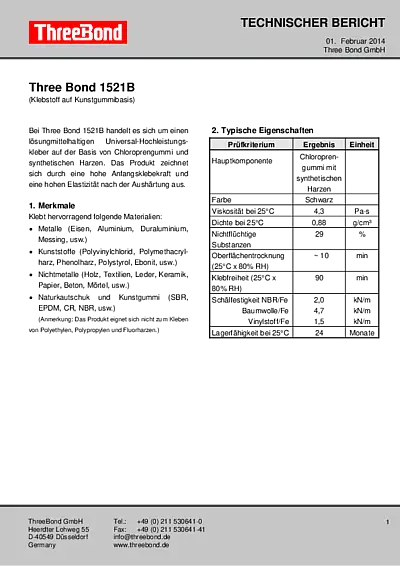
CONTACT ADHESIVE DATA SHEET
05
CONTACT ADHESIVE QUESTIONS
What is a contact adhesive?
A contact adhesive is applied to the specified bonding surfaces; after the product specific flash off phase, the parts are aligned and pressed together. The manufacturer documents reviewed describe high initial tack. Whether the joint reaches the required final strength and durability depends on the particular adhesive, the materials, their surfaces and the service conditions. Initial hold therefore does not replace testing for the load the joint will experience later.
Must contact adhesive be applied to both surfaces?
The documented chloroprene contact adhesives call for an even application to both bonding surfaces. This does not establish a general rule for every other adhesive system. Follow the application instructions for the specific product. Before application, the surfaces should be dry and free of grease, oil and release agents. If the materials or coatings differ from the documented examples, test adhesion on the actual parts before setting the process.
How do flash off time and contact bonding time differ?
Flash off time is the waiting period after application and before the surfaces are brought together. Contact bonding time is the usable window that follows for joining the parts. Both periods depend on the particular product and processing conditions; neither is the time until final strength can be assessed. Ambient conditions, the amount applied and the time needed to align the parts all matter to selection. The current instructions for the chosen adhesive remain decisive.
Which materials can be bonded with contact adhesive?
This can only be answered for a specific product. One documented chloroprene contact adhesive lists metals, various plastics, wood, textiles and rubber among possible bonding materials, but excludes polyethylene, polypropylene and fluorinated resins. Other contact adhesives have different limits; coatings, plasticisers and surface preparation also affect adhesion. Identify both actual materials and test the joint under its intended load rather than inferring suitability from a material name alone.
Does every contact adhesive need an activator?
No. An activator belongs only to systems designed for one. The range includes a water based dispersion variant with its associated activator and a chloroprene contact adhesive whose manufacturer document specifies no such system step. The number of components, adhesive chemistry and curing route are separate selection questions. Check the product documents and your planned application before combining components or adopting processing times.
06
Request advice
Describe both materials, their surfaces, your application method and the loads on the joint. Our adhesive technology team will discuss which product data and suitability tests matter for your selection.
Check contact adhesive for your joint
Send us your requirements for materials, processing and service conditions. We will discuss the appropriate next step with you.

CONTACT ADHESIVES · ADHESIVE TECHNOLOGY
Thomas Klein
Contact for products
Thomas Klein will discuss the materials, surfaces and processing for your contact bonded joint.