

3M SCOTCH-WELD · INDUSTRIAL ADHESIVE TECHNOLOGY
3M Scotch-Weld Adhesives and Accessories
3M Scotch-Weld includes adhesives based on different chemistries and suitable application accessories. Choose according to the parts being joined, the required strength and your process; Krückemeyer GmbH can help assess the options for your application.
01
Selection criteria
Choose Scotch-Weld for your materials and process
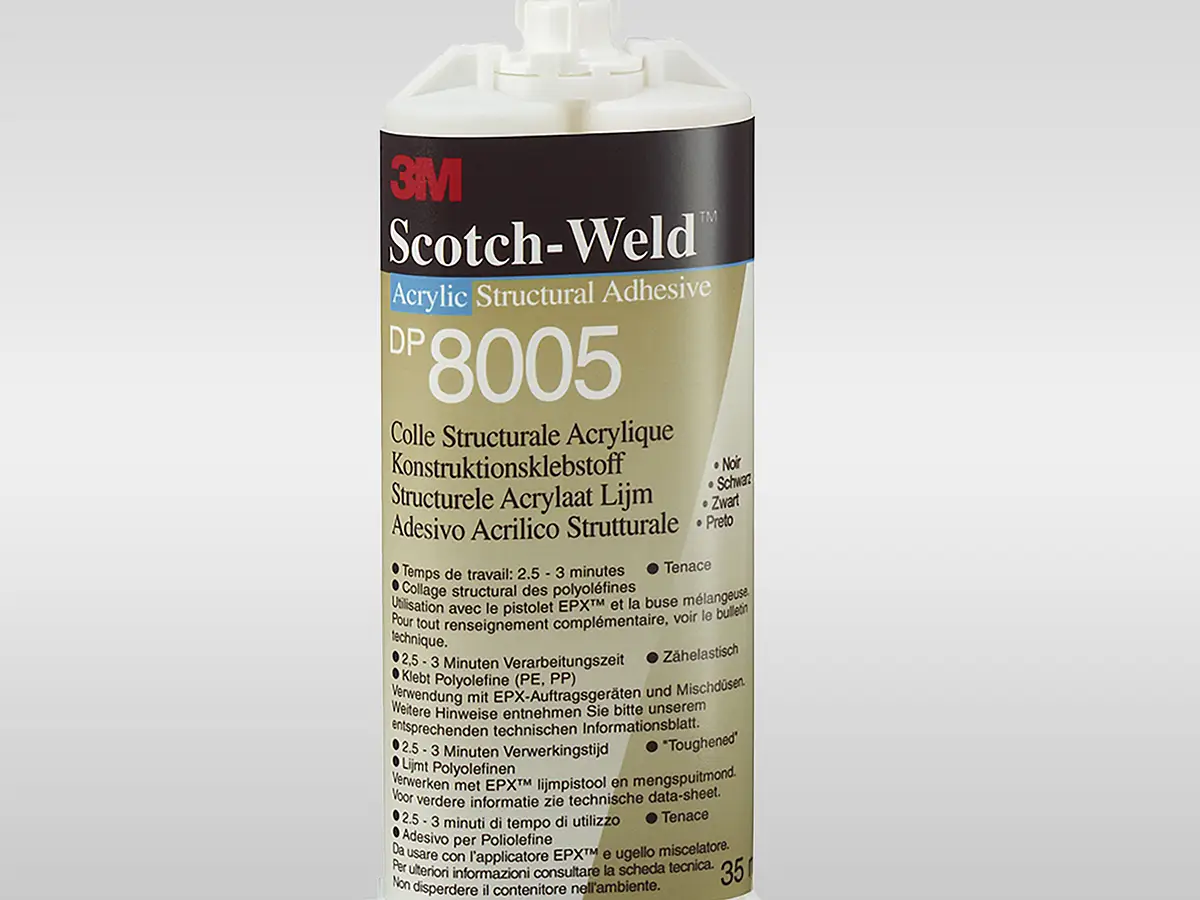
Start with both parts and their actual surfaces: metals, plastics and composites call for different checks. DP8005 is an acrylic structural adhesive specified for low surface energy plastics; DP420 is an epoxy structural adhesive for materials including metals and composites. DP6330NS is a polyurethane adhesive described for flexible joints between composites and metals.
Then consider the load, joint geometry, application method and available time. The number of components describes the mixing system, not the adhesive chemistry: Scotch-Weld includes two-component structural adhesives as well as one-component cyanoacrylate, anaerobic and reactive PUR systems. Working time, open time, handling strength and full cure are distinct, product-specific measures.
02
3M SCOTCH-WELD RANGE
3M Scotch-Weld adhesives in the range
The listing includes Scotch-Weld adhesives from different systems as well as associated mixing and application components. Check suitability on the individual product page.
No products found
No products are currently listed in this category. Request a call back and we will help you find the right product.
Request a callback03
SCOTCH-WELD SELECTION GUIDE
Which Scotch-Weld system suits the joint?
For larger bonded areas or structurally loaded joints, compare the specified acrylic, epoxy and polyurethane products. For rapid initial handling, a specified cyanoacrylate such as SF100 may be appropriate; anaerobic products such as TL42 serve a different purpose in securing metal threads. TE031 is a reactive PUR hot melt adhesive with its own application and curing process. These systems are not interchangeable solutions to the same task.
For an enquiry, describe both materials, surface condition, bond-line dimensions and load, together with application, fixturing and service conditions. The product data and an application check can then narrow the choice. Select accessories in the listing for the specific cartridge and mixing system.
04
SCOTCH-WELD SELECTION QUESTIONS
How do I choose between Scotch-Weld acrylic and epoxy?
Assess both parts, their surfaces, the load and the application process. DP8005 is a two-component acrylic structural adhesive whose product information specifies bonding low surface energy plastics such as PE and PP. DP420 is a two-component epoxy structural adhesive for materials including metals and composites. Neither system is generally superior: the required shear, peel or impact performance and the time available for application must match the individual product. Share the surface preparation and bond-line geometry as well, so the options can be checked against your actual joint rather than a material name alone.
What is the difference between working time and full cure?
Working time is the period available to mix, apply and position an adhesive once processing has begun. Full cure is the later point at which the product reaches its intended final properties. Handling or fixture strength may develop in between; it must not be treated as final strength. These timings vary considerably across Scotch-Weld products. Even products with the same adhesive chemistry need their own data checked. Use the selected product's information to plan how long the parts need to remain fixed and when the next production step can take place.
When is a Scotch-Weld cyanoacrylate suitable?
A cyanoacrylate such as Scotch-Weld SF100 may suit an appropriate small bonding area and a process needing rapid initial handling. Its product information describes fast handling strength on suitable plastics, elastomers and metals; full cure takes longer. Suitability also depends on the surfaces, bond line and moisture. This does not establish suitability for a large structural joint or for securing a metal thread. Describe both materials, the bonding area and the subsequent load before selecting an instant adhesive for production.
When do I need EPX mixing and application accessories?
For compatible two-component Scotch-Weld cartridges, the range includes mixing nozzles and application components. They bring the components together during dispensing and support appropriate dosing. Compatibility depends on the selected product's cartridge format and mixing ratio; a nozzle in the listing must not be assumed to fit every Scotch-Weld adhesive. One-component cyanoacrylates and anaerobic threadlocking products do not have the same mixing requirement. State the precise adhesive and pack format when enquiring about application accessories.
05
Request advice
Tell us about the parts, surfaces, loads and planned application process. Krückemeyer GmbH's adhesive technology team can assess which Scotch-Weld product and application accessories may be suitable.
Check Scotch-Weld for your application
Send us the materials to be joined and your process conditions. We can help you select a suitable adhesive and the accessories required for its application.

ADHESIVE TECHNOLOGY · SCOTCH-WELD
Thomas Klein
Contact for products
Discuss your materials, process conditions and Scotch-Weld options with Thomas Klein.