

HOT MELT · ADHESIVES AND APPLICATION
Hot melt adhesives and applicators
Hot melt adhesive is applied in the molten state, and the parts must be joined within the product-specific open time. Choose the adhesive chemistry and applicator to suit the surface, joining process and subsequent load.
01
Selection criteria
Assess hot melt before comparing products
Start with the parts to be joined and their surfaces. The bonding area, load, application method and time available before joining then guide the choice. A thermoplastic hot melt solidifies on cooling; a reactive PUR hot melt also crosslinks. Assess the adhesive and applicator as parts of the same processing step.
02
HOT MELT RANGE
Hot melt adhesives and applicators in the range
The listing shows hot melt adhesives for different substrates alongside application equipment. Compare the product information and ask about your specific application.
No products found
No products are currently listed in this category. Request a call back and we will help you find the right product.
Request a callback03
SELECT BY JOINING PROCESS
Check open time, chemistry and service conditions
Open time describes the window for joining after application. Initial handling strength after cooling and any further curing are separate matters. The range includes EVA- and polyamide-based hot melt adhesives; their suitability for cartons, wood or electronic components depends on the specific product. Surface condition, structural loads and later service conditions also matter. Include these details in your enquiry so the adhesive and application equipment can be assessed together.
04
HOT MELT SELECTION QUESTIONS
How does open time affect joining with hot melt adhesive?
The parts need to be joined while the applied hot melt adhesive can still be worked. Open time depends on the specific product and application conditions; it does not describe the later service temperature or complete curing. Check the material and surface of both parts, the intended application method and the sequence up to joining. The data sheet for the selected adhesive is the basis for setting the process.
What is the difference between thermoplastic and reactive hot melt?
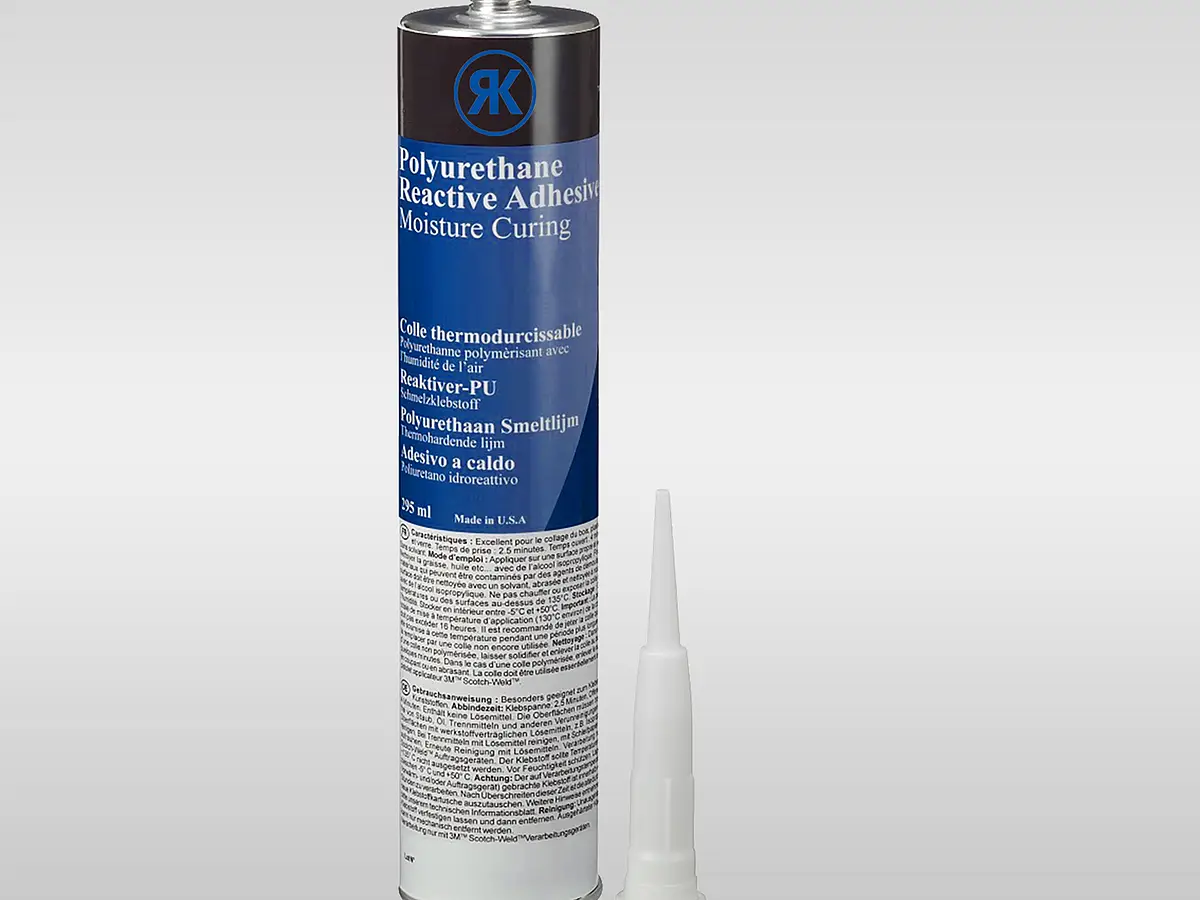
Thermoplastic hot melt adhesive solidifies as the melt cools. A reactive polyurethane hot melt is also applied warm, but then additionally crosslinks through moisture. Initial strength and final cure therefore need to be assessed separately for reactive systems. Both groups are available as hot melt adhesives; the choice depends on the parts, processing and subsequent loads. Any claim about resistance applies only to the specific product that has been assessed.
Which adhesive chemistry suits cartons or electronic components?
That can only be decided for the specific joint. The range describes an EVA-based hot melt adhesive for cartons, cardboard and fabric, while a polyamide hot melt adhesive is also offered for applications involving electronic components. This does not mean every EVA or polyamide formulation suits those tasks. Check surfaces, geometry, loads and processing requirements against the relevant product data sheet, and test the bond on the intended component.
What details are needed when asking about hot melt and an applicator?
Describe both parts and their surfaces, the bonding area, intended loads and environmental conditions. For processing, explain how the adhesive will be applied, the joining sequence, the time available before joining and the planned equipment. If you already use an adhesive or applicator, its exact designation and the required supply form help with assessment. Krückemeyer GmbH can then discuss product selection and outstanding technical questions with you.
05
Request advice
Describe the parts, surfaces, loads and intended application method. Our adhesive technology advisers can discuss which product data and processing conditions matter for your selection.
Enquire about hot melt for your application
Tell us about the parts and your joining process. We can discuss the adhesive chemistry and application equipment that fit your requirements.

ADHESIVE TECHNOLOGY ADVICE
Thomas Klein
Contact for products
Thomas Klein can help assess the parts, adhesive and processing method.