

THREE BOND · ADHESIVES AND SEALANTS
Three Bond products for bonding, sealing and threadlocking
The Three Bond range includes adhesives, sealants, threadlockers and complementary products. The right product for your assembly depends on its function, the substrates, processing requirements and service conditions.
01
Selection criteria
Choose Three Bond by function and processing
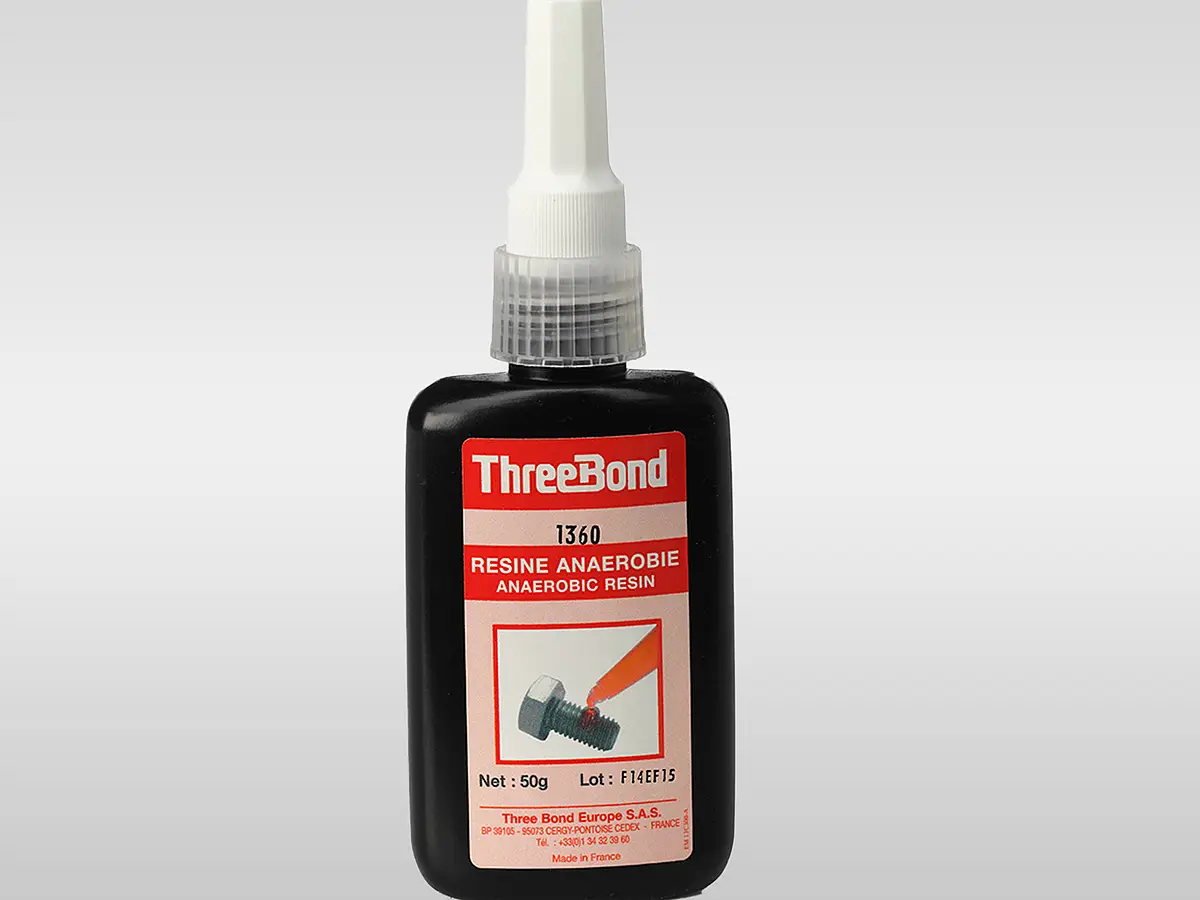
Start with the joint's purpose: are you bonding components, sealing a gap or securing a thread? The Three Bond range contains different product types for these tasks. Consider the materials and surfaces, the loads on the joint, dispensing and cure requirements. A threadlocker does not replace a flange sealant, and a sealant is not automatically a structural adhesive.
02
THREE BOND RANGE
Three Bond adhesives, sealants and accessories
The system listing displays products assigned to the Three Bond brand. Check each item's function and technical information.

Sealant
Three Bond 1107D - Nichttrocknende Hochtemperatur-Flüssigdichtung - 1 kg Dose

Sealant
Three Bond 1221C / 1221D - RTV-Silikon-Klebedichtung - 100 g Tube
Sealant
Three Bond 1220G / 1220H - RTV-Silikon-Klebedichtung - 330 ml Kartusche
Sealant
Three Bond 1217L (Variante B) - RTV-Silikon-Flüssigdichtung - 20 kg Eimer
No products match this combination.
No products match all of the selected filter criteria.
03
THREE BOND SELECTION GUIDE
Which Three Bond product suits your assembly?
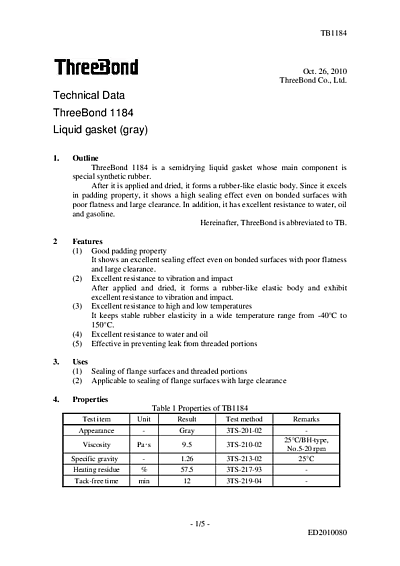
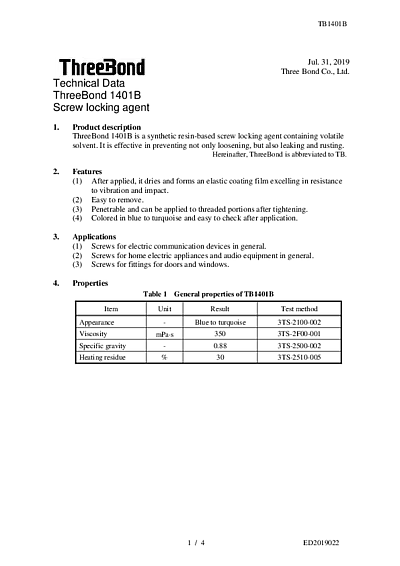
For bonding, the parts to be joined, their surfaces and the mechanical loads guide the initial selection. Three Bond 1784 is described as a cyanoacrylate adhesive for metal, plastic and rubber; Three Bond 2272F is a one-part epoxy resin. The number of components alone does not define the curing conditions. For sealing, the catalog lists Three Bond 1184 as a flexible rubber gasket compound. For a threaded joint, clarify the required locking effect and whether later disassembly is needed; Three Bond 1401B is described as an easily removable threadlocker.
Compare working, fixture and cure information for the specific product only. Tell us the materials, surfaces, gap or thread geometry, loads and service conditions. Krückemeyer GmbH can help you select a product for your application; suitability must be checked on the actual assembly.
04
THREE BOND DATA SHEETS
05
THREE BOND SELECTION QUESTIONS
How do Three Bond adhesives, sealants and threadlockers differ?
They serve different purposes. Adhesives join components, sealants close gaps or seal mating surfaces, and threadlockers secure a threaded connection. The Three Bond catalog contains separate products for these functions. Three Bond 1184, for example, is listed as a flexible rubber gasket compound, while Three Bond 1401B is described as a threadlocker. The intended function of your assembly comes first; the suitability of a particular item must then be checked against its product information and your service conditions.
What does one-part mean for a Three Bond adhesive?
It describes how many components are processed, not the curing mechanism or cure time by itself. The catalog identifies Three Bond 2272F as a one-part epoxy resin. Its data sheet specifies its own curing conditions. For process planning, use the selected product's information on application, fixturing and full cure. Tell us about your workflow and the processing conditions available so that the product selection can be assessed against them.
What information is needed to select a Three Bond threadlocker?
Provide details of the threaded connection, its materials and surfaces, the loads in service and whether later disassembly is required. The product record describes Three Bond 1401B as a threadlocker that penetrates thread clearances and allows easy removal. That description cannot be applied to every other Three Bond locking product. Check the particular grade and its processing instructions against your own connection before deciding.
How do skin formation and full cure differ for Three Bond silicones?
A dry surface does not mean the material has cured through. The technical data sheet for Three Bond 1221G and 1221H describes the formation of a dry surface in contact with atmospheric moisture. It also states that skin formation and depth of cure depend on layer thickness, ambient temperature and relative humidity. The joint dimensions and process conditions therefore need to match the specific silicone used for bonding or sealing; follow its complete processing information before releasing the assembly.
When is a Three Bond data sheet especially useful for an inquiry?
It helps assess a specific item's suitability from its stated function and processing information. This page provides documents for Three Bond 1184 and Three Bond 1401B, which address different tasks. For a useful inquiry, add the substrates, surfaces, geometry, loads and service conditions. The product information can then be compared with your assembly without assuming technical suitability from the brand name alone.
06
Request advice
Describe your assembly and the function you need. In a consultation, we can review the technical information for a suitable Three Bond product and agree the next check.
Ask about Three Bond for your application
Tell us about the substrates, surfaces, loads and processing conditions. We can review the suitable product type and available technical documents with you.

ADHESIVE TECHNOLOGY · THREE BOND
Thomas Klein
Contact for products
Thomas Klein can discuss the joint's function and the technical requirements for a Three Bond product with you.